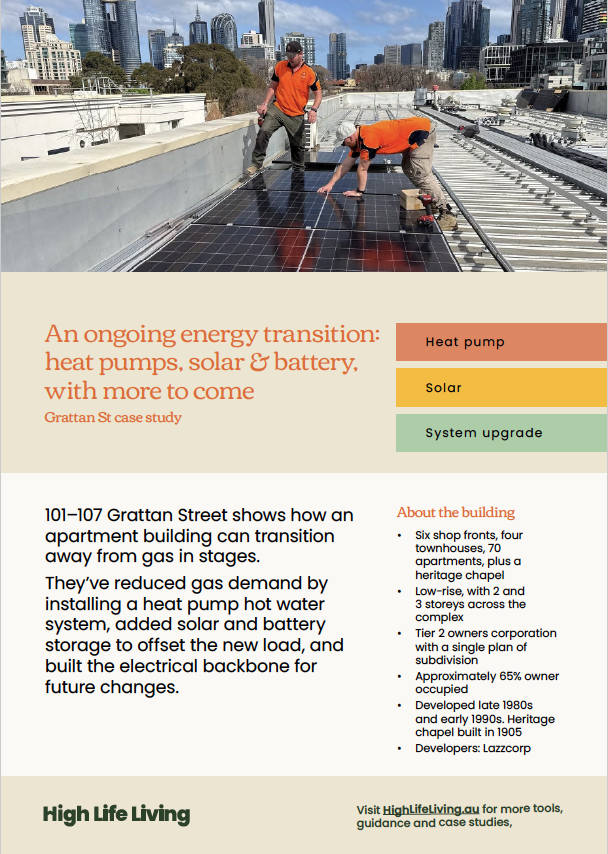
Grattan St case study. Download your copy.
101–107 Grattan Street shows how an apartment building can transition away from gas in stages.
They’ve reduced gas demand by installing a heat pump hot water system, added solar and battery storage to offset the new load, and built the electrical backbone for future changes.
About the building
Six shop fronts, four townhouses, 70 apartments, plus a heritage chapel
Low-rise, with 2 and 3 storeys across the complex
Tier 2 owners corporation with a single plan of subdivision
Approximately 65% owner occupied
Developed late 1980s and early 1990s. Heritage chapel built in 1905
Developers: Lazzcorp
Electrification upgrades to date
The owners corporation has implemented an energy transition project that reduced both its environmental impact and running costs.
Over 5 years the committee has:
Replaced the shared gas hot water system with a series of efficient, electric heat pumps
Installed a 42kW solar system and 48kWh of battery storage, which means solar energy is now powering 30% of the shared electricity load
Upgraded the building’s switch board to safely handle the new electrical load
The owners corporation has started to save over $35,000 a year in gas and electricity bills, making the payback around 8.7 years across the upgrades.
So far the committee has invested $305,000 and isn’t stopping there.
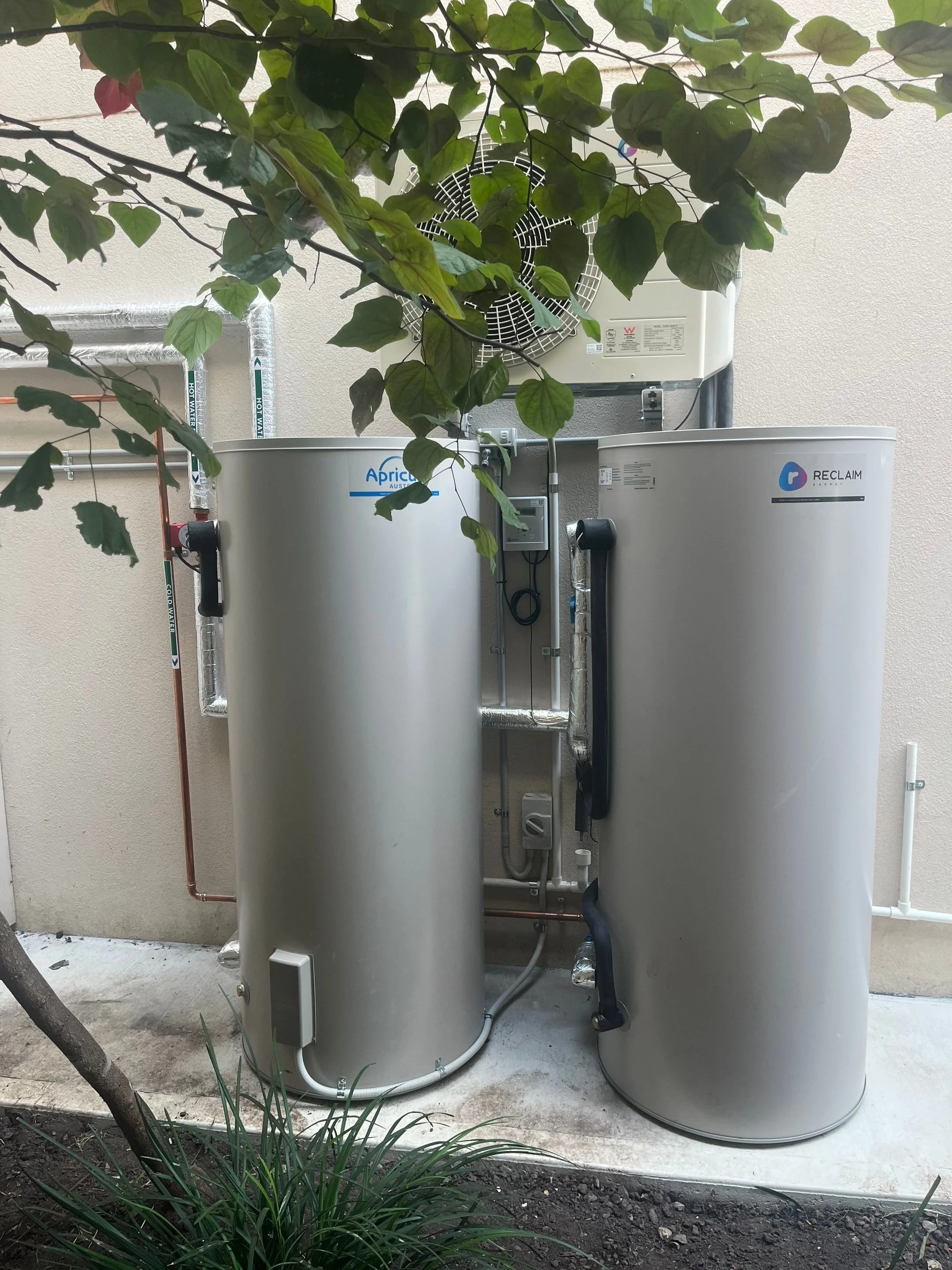
Heat pump hot water systems installed.
Setting the scene
This complex site comprises five separate buildings on a single plan of subdivision. Sixty-four properties have a shared system for hot water and hydronic heating. The townhouses and six red brick apartments only have shared hydronic heating.
Before the transition, the annual gas bill made up 20% of the administration levy. Substantial running costs came from inefficient, ageing gas boilers associated with the hydronic heating and hot water.
Funding the transition
Having done the research, the committee had a clear understanding of the upgrade costs.
Wisely, the committee included the energy transition project in the owners corporation’s maintenance plan.
This is the first time the owners corporation has had a comprehensive maintenance plan (now required by legislation for Tier 1 and Tier 2 owners corporations). The committee brought the plan to the 2023 AGM, where it passed unanimously.
The energy transition project was funded through the maintenance fund, along with a $200k strata loan. The loan will be repaid through the maintenance levy over four years (and partially offset by the savings made). The owners corporation has been gently increasing the maintenance levy over the last few years to help pay down the loan and prepare for future upgrades.
To manage costs, the committee planned the transition in phases. This longer-term planning was critical to success.
Planning the transition
The committee wanted to start with the hydronic heating, but converting it to heat pumps was cost prohibitive. Of the nine hydronic systems serving all apartments and townhouses, six were extremely old and inefficient Raypack boilers. They were replaced with Baxi boilers that are 40% more efficient.
At the time of writing (November 2026), the Victorian Government is considering adding hydronic space heating to the Victorian Energy Upgrades (VEU) program, which may save other buildings from having to make this choice in the future.
There were eight separate gas hot water systems across the 64 apartments, ranging from 3-12 apartments in each system. After the largest system failed, they installed the first of the electric heat pump systems. The main contractor, All Electric Homes, replaced the remaining seven hot water systems in three stages (watch a short video about the installation on YouTube). In total, they installed 10 heat pumps and five finishing tanks across three sites for the shared hot water. The committee was able to access a rebate through the VEU program to subsidise the cost of the upgrades.
Initially, the site wasn’t using enough shared electricity to justify the expense of installing solar power. But once the heat pumps were installed, electricity use tripled, making solar a smart decision. To accommodate the new solar system, a switchboard upgrade was needed.
In addition to the heat pumps, solar helps power common area lights and the 24/7 exhaust fans that deliver fresh air to the apartments. The owners corporation also integrated a battery with the help of a 30% rebate from the Federal Government.
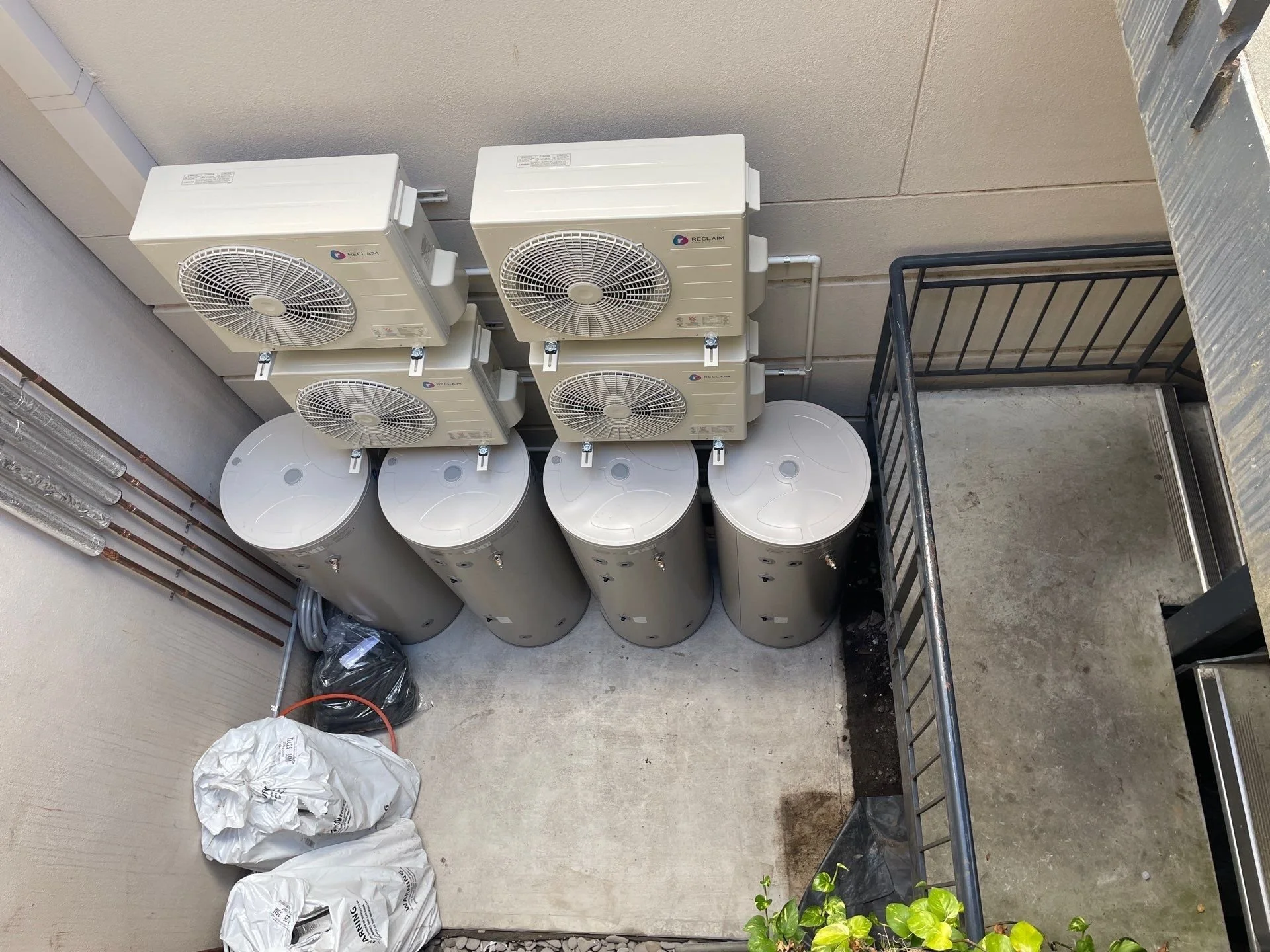
Heat pump hot water systems installed.
The benefits
The owners corporation is now seeing savings of over $35,000 per year in gas and electricity bills. On average, 30% of the shared electricity load is now covered by the solar system, peaking at up to 40% in summer months.
The payback period is expected to be five years for the solar and 10 years for the heat pumps. And while not all the apartments and shops use the upgraded hydronic heating and hot water, everyone benefits from the reduced running costs.
Michael Tynan, Chair of the owners corporation says, “Being part of that transition and doing the right environmental thing is actually a significant benefit. As committee members, we have a responsibility to manage funds responsibly, and we’re starting to see financial benefits through reduced costs. We’re in a position where we can actually keep down some of our running costs in times of inflation.”
The challenges along the way
The transition has taken around five years so far. Not everything has gone smoothly.
Finding a contractor to handle the scale and complexity of the job wasn’t easy. It took a while to find All Electric Homes.
The ground-level visibility of the heat pumps became an issue right at the end of the process. Residents who hadn’t engaged with earlier consultations suddenly objected once construction was underway, with some resorting to legal threats. The committee invested significantly in beautification projects to screen the heat pumps, overcoming the perception that it had created an eyesore.
Securing the $200k strata loan to finish the project in one hit was its own battle, with bank bureaucracy repeatedly sending incorrect documentation despite verbal agreements. And throughout, a small number of owners (particularly those in apartments and shops without direct access to the shared hot water system) questioned why they were contributing to the cost at all, requiring careful legal navigation to resolve.
These challenges highlight that you can consult thoroughly, but a largely disengaged ownership means some conflicts will only surface once the work is visible. The key is staying flexible, solving problems as they arise and being prepared for a marathon, not a sprint!
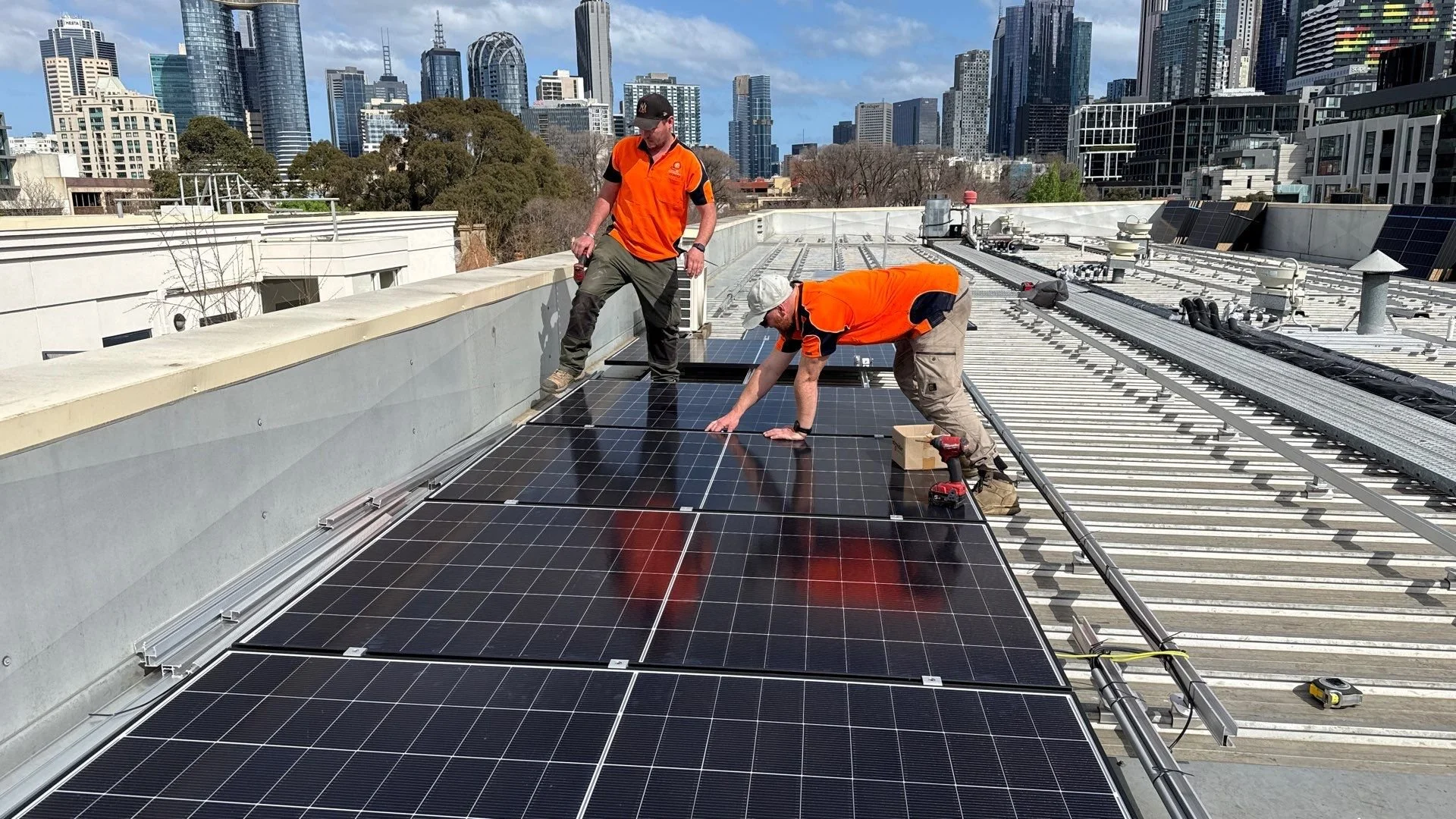
Solar being installed on the roof.
The keys to their success
The committee attributes the project’s success to:
1. Transparency and planning
Including the energy transition project in the maintenance plan was critical. Taking the plan to the AGM provided transparency and the opportunity to engage the residential and commercial community in the proposed changes and their benefits.
2. A committed committee
The committee members are all dedicated to the project’s aims. While there has been some committee turnover (usually one or two people step off the committee each year), there’s been enough experience and continuity to navigate the processes together.
3. Community engaged to maintain momentum
Regular communication with residents, commercial owners and tenants sought to keep the whole community informed and on board. The committee shared a resolve to ensure clarity, transparency and engagement while remaining committed to the responsibilities laid out in the maintenance plan.
When concerns arose, the committee and All Electric Homes stayed flexible and worked with residents to find solutions.
For example, the heat pumps were too big and heavy to be hidden away on the roof so new locations had to be found. One of the heat pumps was initially designed to be wall mounted but was instead installed on the ground. This change made the heat pumps less obvious to the apartments opposite. Screening was added to the other heat pumps systems to reduce the visual impact on the residents’ treasured gardens.
4. Motivated team and clear communication
The project was well supported by a motivated owners corporation manager, committed to collaborating with the committee to implement and maintain the new infrastructure.
The project enjoyed a robust relationship and good communication with its key supplier, All Electric Homes, who helped the committee understand the best way to achieve their aims and find solutions to problems.
What’s next
Further beautification projects to improve the affected gardens.
Exploring additional heat pumps and batteries for evening energy use.
Testing the appetite for ‘behind the meter’ solar electricity for individual apartments.
Thank you to Michael Tynan for telling the story of their owners corporation and congratulations on your achievements!
At the time of publication, Victorian Energy Upgrade discounts were available for hot water heat pumps.