Mathoura Rd case study. Download now.
Two owners wanted to install solar power, three didn’t.
This difference wasn’t a roadblock. The owners corporation designed a solution so all owners can invest in solar if, and when, they want.
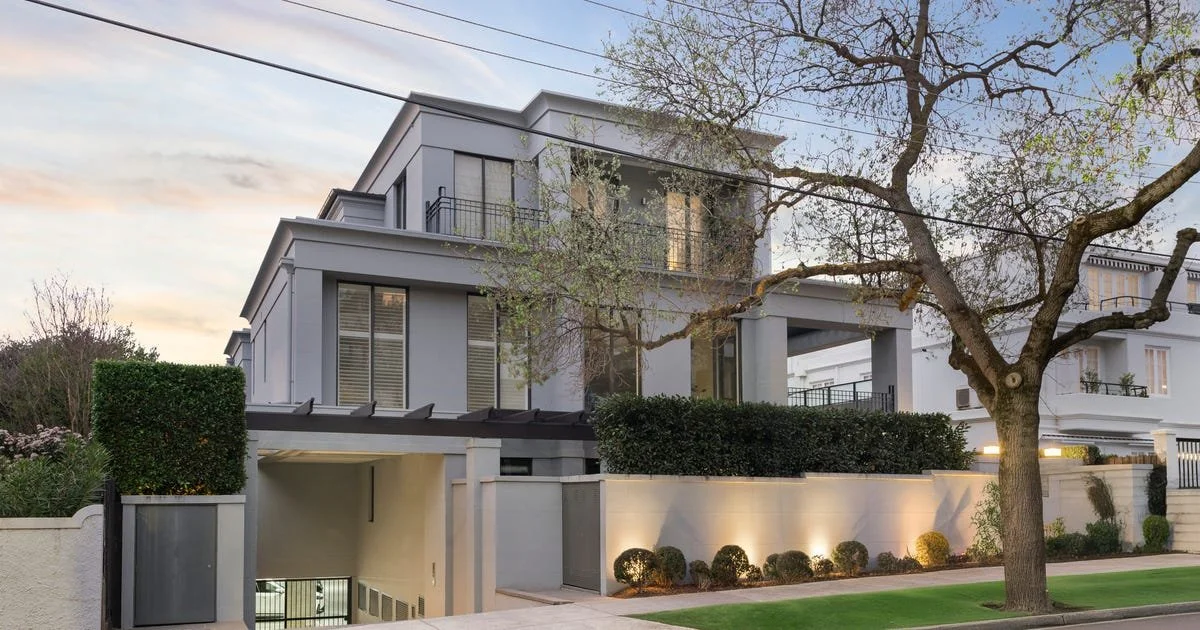
About the building
5 premium apartments. Tier 4 owners corporation
Low rise building with basement car parking
Developer: Kokoda Property Group
Designed by: Catt Architects and Stuart Rattle Interiors
The residents of 103 Mathoura Road, Toorak installed a 30kW solar system and battery to supply two of the five modern apartments with renewable electricity in late 2025.
Getting owner agreement
The project success was due to a small, agile and engaged Owners Corporation, OC Managers proficient in process management, and an experienced solar company.
While only two of the households opted into the behind the meter solar power and battery system, all five owners unanimously agreed with the idea of a solar and battery installation. And there’s room to expand if more owners want to transition to renewable energy in the future. One of the owners taking advantage of the solar power, Dhruba Gupta, told us, “We have an agreement in place that allows some adjustment, so that all owners have an equal share of the roof footprint.”
Keystone Strata Group were there to ensure that the project followed the correct procedures. They organised a ballot to pass a resolution that allows the installation of the panels on the shared roof space. Keystone’s CEO, Ash Sayers, explains “Under the Victorian Owners Corporations Act, Owners Corporations are allowed to lease or license the common area for private use to another lot owner, but in order to do that, they have to have 75% of the owners agree. And no more than 25% objecting. If you don’t have owners engaged and willing to hear the conversation and come at it open-minded, then it won’t get up at all. And then if you do have owners willing to talk but you don’t have a manager who is trying to think of everybody equally, that’s where it can also potentially fall down.”
At 103 Mathoura Road, there was 100% agreement. “The five owners get on very well here, and we’re pretty cooperative, and so there was no issues with their consent. If we didn’t have unanimous support, we wouldn’t have gone ahead.” says Dhruba.
Why would owners agree to the change if they weren’t interested in taking advantage of the technology?
Dhruba says, “They didn’t object to the idea of it, but they felt it was not the right time, or there wasn’t enough usage to justify it for them. One of the owners had a concern whether the roof was strong enough to take panels. We had to get an engineer in to do an inspection and give approval that it was fine. And as soon as that happened, this owner was happy to go ahead.”
Costs and subsidies
The project took advantage of the government subsidies for solar power and home batteries. Dhruba explains, “The whole installation cost, without the subsidy, would have been about $40,000 each, and it was about $30,000 each with the subsidies.”
At the time of the installation, there was an idea that the government subsidies would no longer be accessible after December 2025. Dhruba tells us, “We understood that if the system couldn’t be switched on by the end of December, then the subsidies wouldn’t apply, and that would add another $10,000 to our costs. All Electric Homes were able to do it. The installation happened very quickly. And not only did they get the installation done, but they got the inspector to come and certify it before it could be activated. So, it was a bit of touch and go, because the inspector was hard to get at the end of December.
“They had to get the cabling done from the ceiling down to the basement. They covered them under panels painted a matching colour so the other owners didn’t object to the look of it, and we got that process through in time.” Thankfully the government is continuing its subsidy program (at time of publication).
No project is perfect
While the December installation was smooth, the final administration process experienced a couple of challenges over the summer break so the registration with the electricity distributor, then the retailer, wasn’t completed until February 2026.
The solar experience
Six months in, Dhruba is keeping an eye on the data, using the app and the electricity retailers website to understand the impact of the energy performance on his bills. “It’ll probably take a year to see. But even in the winter, you’re better off. Because the days like today there’s enough sunshine. I’m at roughly 50% of the battery storage, so on many days I’m not using any power off the grid, even with the heater going.”, he says.
The residents are in a learning phase. They control the variables to make their lives comfortable and use the app to track their daily usage, getting the most out of the technology in which they’ve invested.
Dhruba says, “I would like somebody to come in and give me a 10-minute tutorial on how to optimise the settings. But I’m not worrying about it too much. All I know is that I’m comfortable in the winter months when you end up using a lot of electricity for heating, and the bill shock is yet to be there. And I know that energy prices will keep rising, so that will make the payoff even shorter than it is today. And I think on top of the savings, if I were ever to sell this place, it would just have some additional value to a new owner.”
Advice to others
OC Manager, Ash Sayers, encourages apartment buildings to take advantage of the benefits of transitioning to renewable energy, saying, “I think that anybody that lives in an apartment building or any manager that manages an apartment building right now should be looking at these options.”
Dhruba’s example is a great reminder that, even in apartment buildings, it’s sometimes possible for just a portion of owners to act. When considering upgrading or installing new technology, look at all potential pathways, and consider current and future implications.
Engineering firms, specialist consultants and technology installation companies can provide reports that outline the costs and potential savings to inform energy transition projects. Some local councils are subsidising these reports so, check with your council if your committee is considering an energy upgrade.