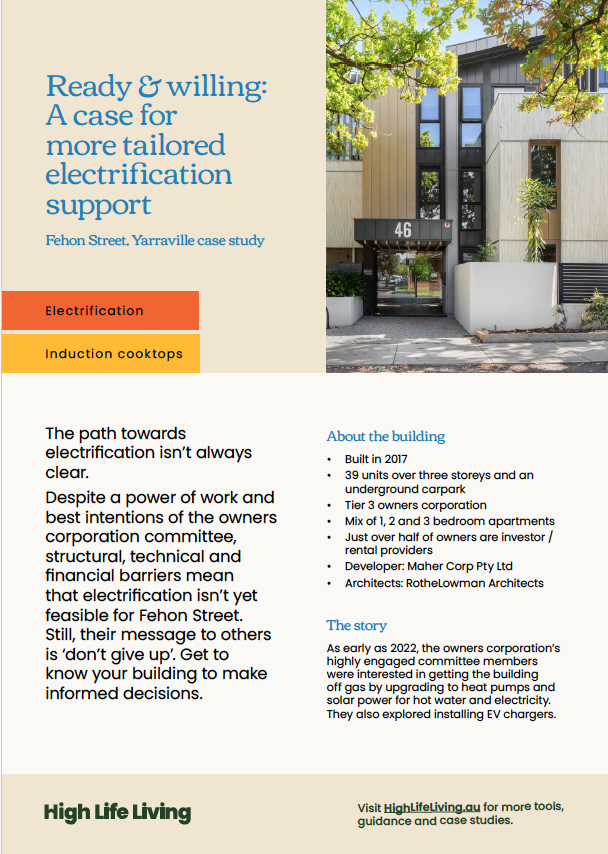
Fehon Street, Yarraville case study. Download your copy.
The path towards electrification isn’t always clear.
Despite a power of work and best intentions of the owners corporation committee, structural, technical and financial barriers mean that electrification isn’t yet feasible for Fehon Street. Still, their message to others is ‘don’t give up’. Get to know your building to make informed decisions.
About the building
Built in 2017
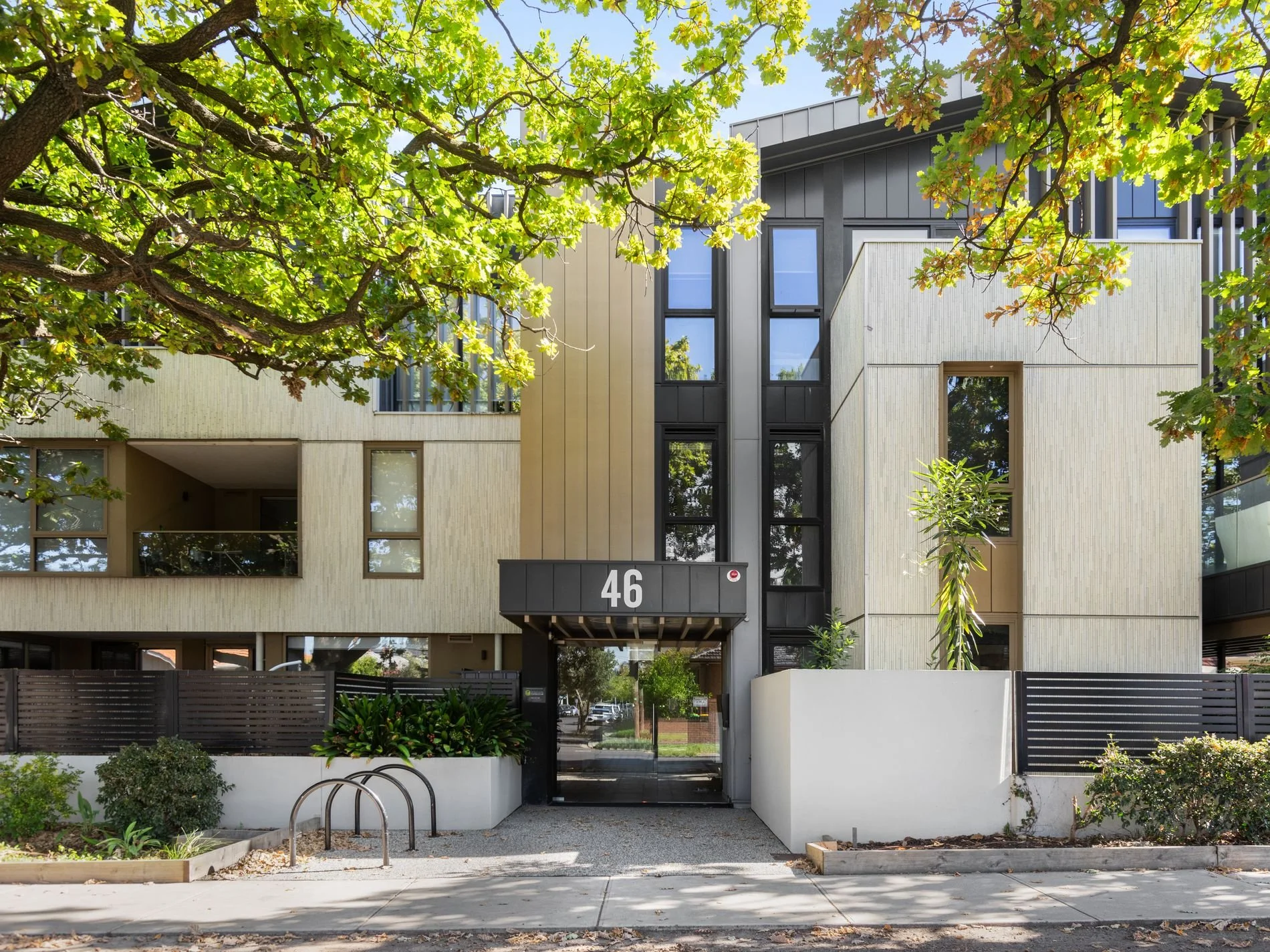
39 units over three storeys and an underground carpark
Tier 3 owners corporation
Mix of 1, 2 and 3 bedroom apartments
Just over half of owners are investor / rental providers
Developer: Maher Corp Pty Ltd
Architects: RotheLowman Architects
The story
As early as 2022, the owners corporation’s highly engaged committee members were interested in getting the building off gas by upgrading to heat pumps and solar power for hot water and electricity. They also explored installing EV chargers.
Chairperson of the owners corporation, Georgia Marett, says, “I’ve been involved in climate activism, so I am very aware of the climate crisis. And there are also a lot of other reasons for sustainability upgrades on the building. There’s the need for a building like ours to be modern and keep up with the best practices and standards. It’s also about protecting people’s investment. When people are thinking of buying in this building, they ask me what’s the solar situation? What’s the EV charger situation? So how do we make sure this building is good, meets people’s needs, and also exceeds their expectations?”
Early in their investigations, the Committee started to uncover structural, technical, governance, and financial challenges that would impact their ability to achieve their vision. Understanding the building and it’s infrastructure early was important to focus their efforts.
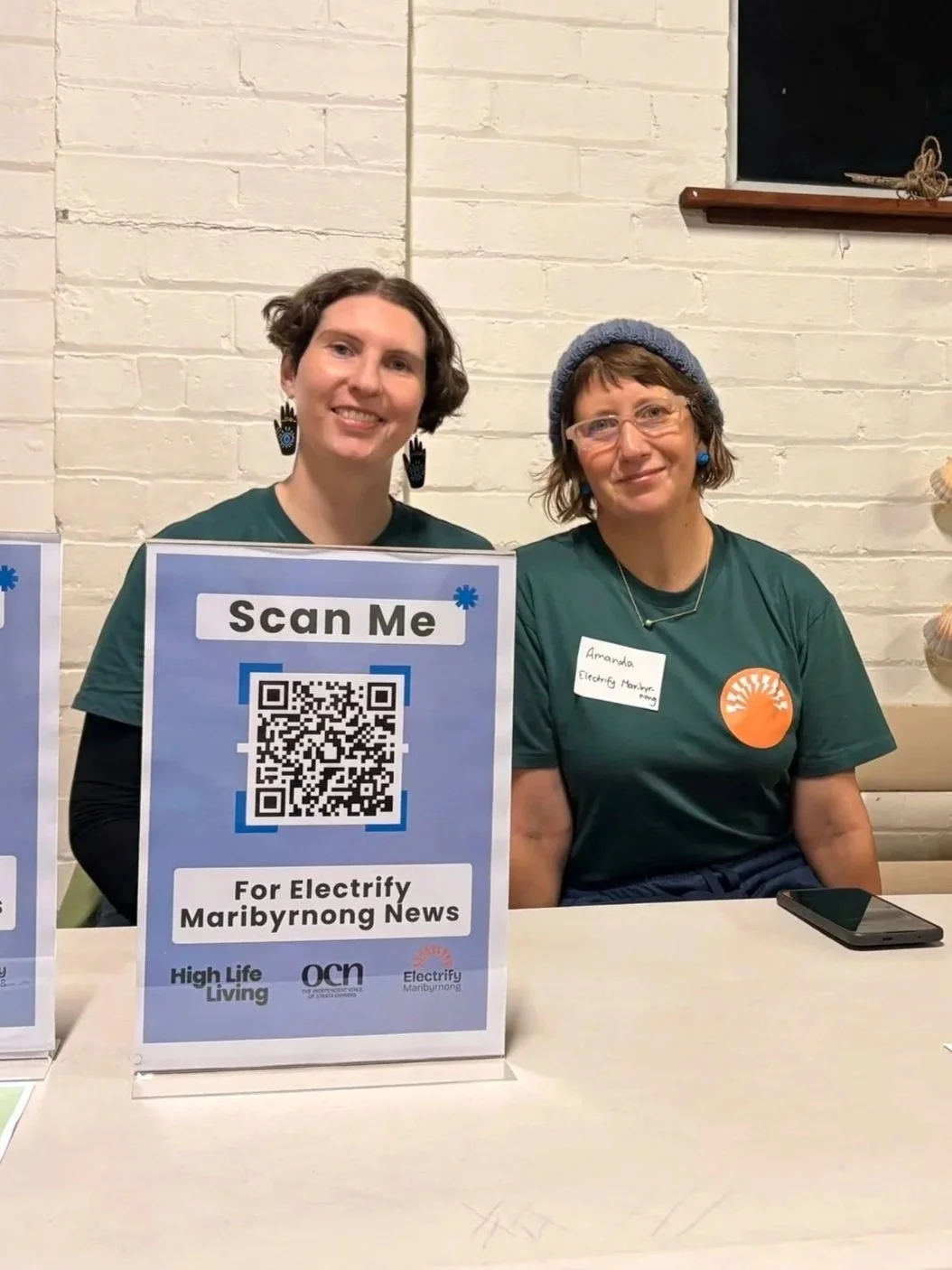
“I would really like government and businesses to pay attention to these issues for people living in apartments.” Georgia Marett, owners corporation chair (left). Amanda from Electrify Maribyrnong (right).
The structural and technical challenges: lack of space and competing priorities
While the building’s roof space is large, the committee found there would only be enough room for solar panels for either common property or some private use, but not both. It was unclear if the roof had space and appropriate engineering to house a common hot water heat pump system. And the alternative – a series of small heat pumps – would require every owner to find space for the technology within their apartment, space that the apartments were not designed to accommodate.
Like most apartment buildings, ongoing maintenance – from the more visible (like landscaping and the upkeep of the building’s facade) to the more urgent (like leaks and structural repairs) – competes for budget and impacts the committee’s ability to prioritise long-term sustainability decisions.
Georgia says, “We have a lot of issues with the building, some of which are covered by insurance and some of which aren’t. Our owners corporation fees per unit are already pretty high. And our maintenance fund is stretched. So we didn’t really want to put a lot of stress on that.”
The Committee also found it hard to locate suppliers who were experienced in helping apartment buildings to make the change. “I was going to electrification expos and almost everyone telling me, we don’t do that, no one’s really done that”, says Georgia.
The governance challenges: getting agreement and managing big projects
Implementing a significant energy transition project like this would require owner engagement and a special resolution (at least 75% of all lot entitlements voting in favour) or an interim special resolution (at least 50% of all lot entitlements voting in favour, and no more than 25% against). The building has both investors and owner occupiers, and the committee needs to manage a mix of engaged and disengaged owners.
Before the building could get off gas completely, every owner would need to pay to retrofit their apartment with an induction stove top. That can be a tough sell for people on lower incomes or people who prefer gas cooking.
As a project lead, Georgia quickly found herself becoming an expert in project management and cutting-edge technology.
“A couple years ago, I was putting a real good effort into trying to figure out whether we could retrofit our building with EV chargers and I was being told by the energy retailer that we were going to have to install a new load management system in the basement so the building can handle all the charging. That’s between $70k and $120k. You then have to make the decisions: is it joint chargers or does everyone get their own charger and is it trickle chargers or is it fast chargers? The quantity of decisions is huge,” says Georgia.
And the path isn’t always clear. Georgia says, “There are more options the more people you speak to – the energy retailer had one perspective but then talking to people at expos there were other options that I hadn’t heard about from the retailer. It’s hard to know who the authority is.”
The financial challenges: high costs and no rebates
The biggest barrier turned out to be the building’s embedded network.
An embedded network is a private electricity system where a private company buys electricity in bulk and sells it back to the residents. This system is common in multi-residential buildings such as Fehon street. Unfortunately, having an embedded network makes the building ineligible for Solar Victoria rebates on solar panels and heat pumps, which can be critical to making this kind of energy transition project affordable.
Georgia says, “We were quoted $200k for big solar, a big battery and a heat pump. That’s your gold standard solution. But even just doing a heat pump to replace our hot water is still $97k.”
“We looked at getting a strata loan, but that’s an 11% interest rate. We did the calculation over ten years, and it just wouldn’t pay for itself. By the time we’d pay it back, we’re thinking, do we need new solar panels at that point? So it just was a complete non-starter from a monetary point of view.”
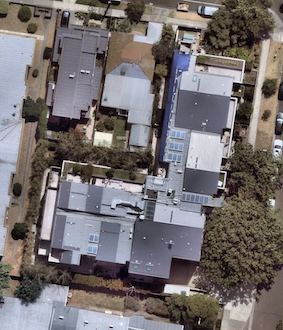
Birdseye view of the Fehon Street apartment development
Suggestions for success
Georgia and fellow Committee members have now gathered such a valuable store of information that they would like to share it to help and encourage other apartment owners.
Georgia wants you to know, “There are other buildings where they will be able to do this. Our story is not a story to cause people to give up.”
Some things did work at a smaller scale. For example, Georgia replaced her gas cooker with an induction stove top. She says, “Induction cooking has the highest life to cost benefit ratio of anything I’ve ever done for my house. It’s improved my life and it didn’t really cost that much.”
The supplier landscape is also changing. There are an increasing number of suppliers with interest, expertise and experience planning for and completing electrification upgrades in apartment buildings. And not everything has to be done at once. Understanding the building, then developing a staged plan with clear priorities are important first steps.
A rallying call for the future
In Melbourne, apartment homes form a big and rapidly growing sector, providing people with affordable and comfortable living, connection to community, and safety in these changing times.
But if these homes are to keep pace with residents’ needs, and provide equal access to sustainable solutions, then systemic change is needed to enable meaningful transitions on a bigger scale.
Georgia says, “I would really like government and businesses to pay attention to these issues for people living in apartments. And for people who live in apartments, keep your ear to the ground for new rebates, new legislation, and tested solutions for getting apartments off gas.”
Thank you to Georgia for generously sharing your story and using what you’ve learned to help smooth the way for others.