Case Studies:Waste Management in apartments
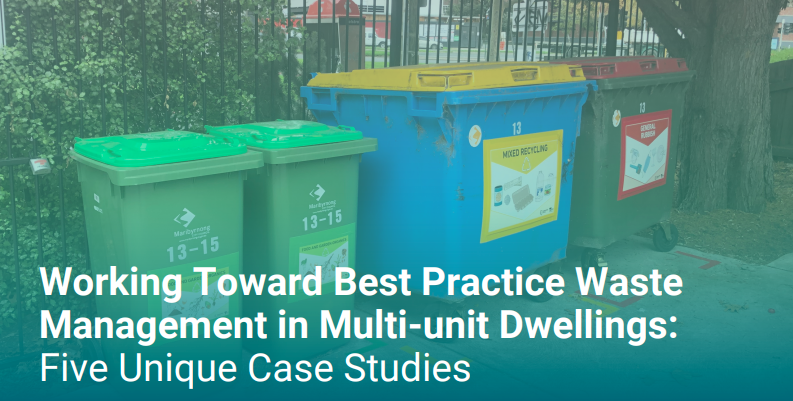
Managing waste and recycling in apartment building can be a big challenge but you’re not alone in trying to tackle it.
Read these five case studies to see how other buildings are tackling better waste and recycling systems and engagement.
The case studies below have been developed by Reground and participating Councils based on an 18-month program with 60 apartment buildings in Victoria. The goal of this project was to reduce waste sent to landfill in multi-unit dwellings (MUDs) and has been delivered by Reground through support from the 10 participating Councils and Sustainability Victoria's Circular Economy Councils fund on behalf of the Victorian Government.
‘Best practice waste management’ means reaching the highest possible recycling rates to reduce the amount of waste sent to landfill. Achieving this looks like separating recycling into their different materials and recycling options (e.g. cardboard/paper, separate from food organics & garden organics, separate from clothing and textiles). ‘Best practice waste management’ also takes into consideration how waste is disposed of once collected, and whether these systems are ethical and transparent to ensure good environmental and customer service outcomes.
To work towards achieving best practice waste management, the program targeted resident behaviour change through educational material and workshops. It also implemented waste area improvements including clear signage, floor markings and increased recycling type options. These case studies portray the waste management experience with five different types of MUDs involved in the program. Across the 12-month engagement period, Reground worked directly with these buildings, their residents and the owners corporation committees and managers to make physical changes to their waste area and bring educational awareness to residents.
Reground envisions ‘best practice waste management’ to include 6+ recycling bin types. While not every building was able to achieve this within the time frame, these case studies highlight what changes were able to be implemented and the opportunities these buildings have to build upon and improve their recycling systems moving forward.